


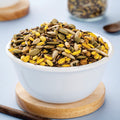


Sev, Gathiya and Chiwda: Understanding the Classics of Farsan
The afternoon sun filters through the kitchen window and suddenly you're eight years old again, watching your grandmother's practised hands press golden strands of besan sev through the sancha. That unmistakable aroma of roasted gram flour meeting hot oil wasn't just cooking. It was home materialising in your senses, a daily ritual that connected you to countless generations who understood that farsan is never merely food.
Why These Classics Define Indian Snacking Culture
Traditional Gujarati farsan represents one of India's most sophisticated culinary achievements. The seemingly simple act of transforming chickpea flour into crispy sev, gathiya, or savoury chiwda requires precision that machines cannot replicate and recipes that hold centuries of refinement. Understanding these classics means recognising the artistry behind India's most beloved tea-time snacks.
Heerson Promise: We honour the authentic techniques that make handmade farsan extraordinary, from selecting the finest besan to maintaining oil temperatures within precise ranges that our founders perfected generations ago.
Sev: The Golden Thread of Indian Celebrations
Lahasun Sev, Makmali Gathiya, Barik Sev - the varieties speak to regional pride and family traditions. This isn't just fried gram flour snacks; it's edible heritage, shaped by geography, spices and the collective wisdom of home cooks across India.
Variety Guide:
-
Thick Sev: Robust texture, perfect for sev puri and bhel puri.
-
Thin/Nylon Sev: Delicate strands ideal for garnishing poha and upma.
-
Spiced Varieties: Spicy sev with clove and pepper.
Quick tip: Different sev thickness serves different purposes. Stock both thick and thin varieties for versatile Indian street food preparation at home.
Heerson Assurance: Our sev achieves its signature crunch through double-filtered oil heated to precisely 175-180°C, ensuring uniform cooking and extended freshness.
Gathiya: The Pride of Gujarati Farsan Heritage
Gathiya holds a special place in every Gujarati household. Thicker than sev, with that distinctive snap when you bite down, authentic gathiya represents the perfect balance of spice, salt and that ineffable quality called kararpan - the crisp texture that defines excellence.
Occasions & Uses:
-
Morning Ritual: Paired with hot masala chai and newspaper reading.
-
Festival Preparation: Essential component of Diwali farsan boxes.
-
Travel Companion: The ultimate train journey snack across India.
Storage Specifications:
-
Optimal temperature: 18-24°C
-
Humidity tolerance: Below 55%
-
Container type: Airtight steel or glass with rubber-sealed lids
Quick tip: Test gathiya freshness by the sound. Fresh gathiya produces an audible snap. Stale pieces bend silently.
Chiwda: The Orchestra of Textures and Flavors
Poha chiwda (also called chivda or mixture) is farsan's most complex expression. Every bite should deliver roasted peanuts, curry leaves, dried coconut and fried gram dal in perfect proportion, a composition that requires both precision and instinct.
Regional Variations:
-
Indori Chiwda: Heavier on boondi and sev, slightly sweet undertones.
-
Maharashtrian Poha Chivda: Thin poha with generous peanuts and curry leaves.
-
Rajasthani Mix: Includes moong dal, chana dal and spiced nuts.
Heerson Assurance: We hand-sort every ingredient, ensuring only uniform-sized components that fry evenly and deliver consistent crunchy texture in every handful.
Quick tip: Revive slightly softened chiwda by spreading it on a plate and microwaving for 20-30 seconds. Let cool completely before storing.
Festival Gifting: When Farsan Becomes Legacy
During Diwali, Janmashtami, or Uttarayan, gifting premium farsan assortments transcends mere etiquette. It's a declaration of relationship value, showing recipients you've chosen quality that honours them.
Curated Gift Combinations:
-
Sev and Gathiya combo packs in decorative traditional tins.
-
Chiwda variety boxes featuring different regional styles.
-
Luxury farsan hampers pairing classics with contemporary flavours.
Quick tip: For corporate gifting, choose neutral packaging. For family, embrace vibrant traditional designs that evoke festive joy.
Your Farsan Selection Checklist: Quality Recognition Guide
Visual Inspection:
-
Uniform golden-yellow colour (not pale or dark brown).
-
No oil pooling at the container bottom.
-
Consistent size and shape within each variety.
-
Absence of burnt particles or debris.
Texture Evaluation:
-
Immediate crunch upon biting (not soft or chewy).
-
Clean break without greasiness.
-
Light, airy feel despite crispy texture.
Ingredient Transparency:
-
Clear listing of gram flour (besan) as the primary ingredient.
-
Natural spices without artificial flavour enhancers.
-
Specification of oil type (refined groundnut or refined palmolein).
Technical Preparation & Storage Guidelines
Home Storage Best Practices:
-
Transfer to airtight containers within 2 hours of opening the original packaging.
-
Layer bottom with food-grade paper to absorb residual moisture.
-
Store away from strong-smelling foods (farsan absorbs odours readily).
-
Ideal consumption window: 20-30 days from the manufacture date.
Serving Temperature Standards:
-
Room temperature (22-25°C) delivers optimal crunch.
-
Never refrigerate (moisture condensation ruins texture).
-
Microwave revival: 30 seconds maximum, cool completely before consuming.
Quality Indicators:
-
Fresh farsan should feel light in the hand despite the quantity.
-
Oil should be minimal, not a greasy residue on fingers.
-
Aroma should be roasted and spice-forward.
Pre-Purchase Questions Answered
Q: Why does homemade taste different from store-bought? Authentic artisanal farsan uses traditional pressing techniques and controlled frying temperatures that home kitchens struggle to replicate consistently. The besan quality and spice blending ratios also differ significantly.
Q: How do I identify fresh farsan? Check manufacturing dates, examine colour uniformity and most importantly, trust the crunch. Fresh sev and gathiya snap audibly; stale varieties bend or crumble without sound.
Q: Can farsan be part of balanced eating? In moderation, yes. Gram flour-based snacks provide protein and fibre. Choose air-tight-packed varieties made with quality oils and enjoy as occasional treats rather than daily staples.
The Heerson Difference: Generations of Getting It Right
Our family has been perfecting traditional Indian farsan since before independence, not through shortcuts or mass production, but through the painstaking commitment to methods that our grandparents would recognise and approve. Every batch of Heerson sev, every package of gathiya, every tin of chiwda carries forward techniques refined across generations. When you choose Heerson, you're not just buying snacks. You're becoming part of a story that values authenticity over expediency, heritage over trends.
Experience Farsan as It Was Meant to Be
Explore our collection of authentic Gujarati farsan and traditional Indian snacks crafted with the care your memories deserve.